
What Affects The Cost of Implants: Guide for Detroit-Area Patients

If you've been searching for dental implant costs in Detroit, you've probably seen prices ranging from $3,000 to well over $10,000 with no clear explanation for the gap. Those numbers are all real, but none of them tells you what your own treatment will cost, because implant pricing is built around your specific clinical situation, not a standard menu.
Dr. Weiner and the specialist team at Lakeshore Dental Specialists in Eastpointe put this guide together to walk you through the factors that actually drive cost: bone volume, number of teeth, grafting needs, sedation, and how insurance fits in. Understanding these before your dental implant consultation means fewer surprises and better questions.
If you'd rather talk it through with a person, call (586) 238-3199.
What to Know Before You Compare Prices
- Implant pricing is built around your specific clinical situation, not a standard menu.
- Bone loss is the factor that surprises most patients and often requires preparatory work before an implant can be placed.
- How many teeth you're replacing, and the method used, whether individual implants, a bridge, or a full-arch solution, shapes the total significantly.
- Sedation and surgical complexity carry real costs that vary by case.
- Most Michigan dental plans cover implants poorly, so patients with and without insurance often land in a similar out-of-pocket position.
Why Two People Can Get Very Different Quotes
"Just give me a ballpark" is a fair request, and it's harder to answer than it sounds. An implant isn't a product with a sticker price. It's a plan built around the conditions in your mouth, and those conditions vary from person to person.
Picture two people missing the same lower molar. One has healthy bone and gum tissue, so the path is straightforward: place the implant, restore the tooth. The other lost bone during the years the space sat empty and needs bone grafting first, or is dealing with a failed root canal and an extraction still to come. Same missing tooth, two treatment plans that barely resemble each other.
That difference in underlying conditions is the biggest reason quotes differ between patients. The more preparation your mouth needs before an implant can be placed, the more the total cost reflects that work.
Bone Volume: The Factor Most Patients Don't Anticipate
When a tooth comes out, the bone that used to hold its root loses its job, and the body slowly reabsorbs it. Months pass, then years, and the ridge that looked fine in the mirror has quietly thinned underneath. Infections, a root canal that didn't hold, or an earlier implant that failed all speed up the same process.
By the time someone is ready to move forward, the bone needed to anchor an implant may not be there in the volume or density required. That's when preparatory work stops being optional and becomes something that has to happen before anything else.
Bone Grafting
A graft rebuilds volume at the implant site. The graft material acts as a scaffold, holding space while your own cells grow in and rebuild the area. Grafting requires a healing period before an implant can be placed, which is why it adds both time and cost. It's also what makes a stable implant possible in a site that couldn't have held one.
Sinus Lifts
In the upper back jaw, the sinus cavity often sits very close to where an implant needs to go, sometimes with only a few millimeters of bone between them. A sinus lift gently raises the sinus membrane to create room for graft material, building the vertical height an implant requires. It's a separate surgical step with its own line on an estimate, and it's typically handled by one of our oral surgery specialists.
Why Skipping Preparation Costs More
An implant placed into insufficient bone won't bond properly, and an implant that doesn't bond has to come out. Then you're treating a compromised site, grafting anyway, waiting again, and paying for the second attempt on top of the first. A lower initial quote that skips necessary preparation isn't a better deal; you're paying the same cost later, plus more.
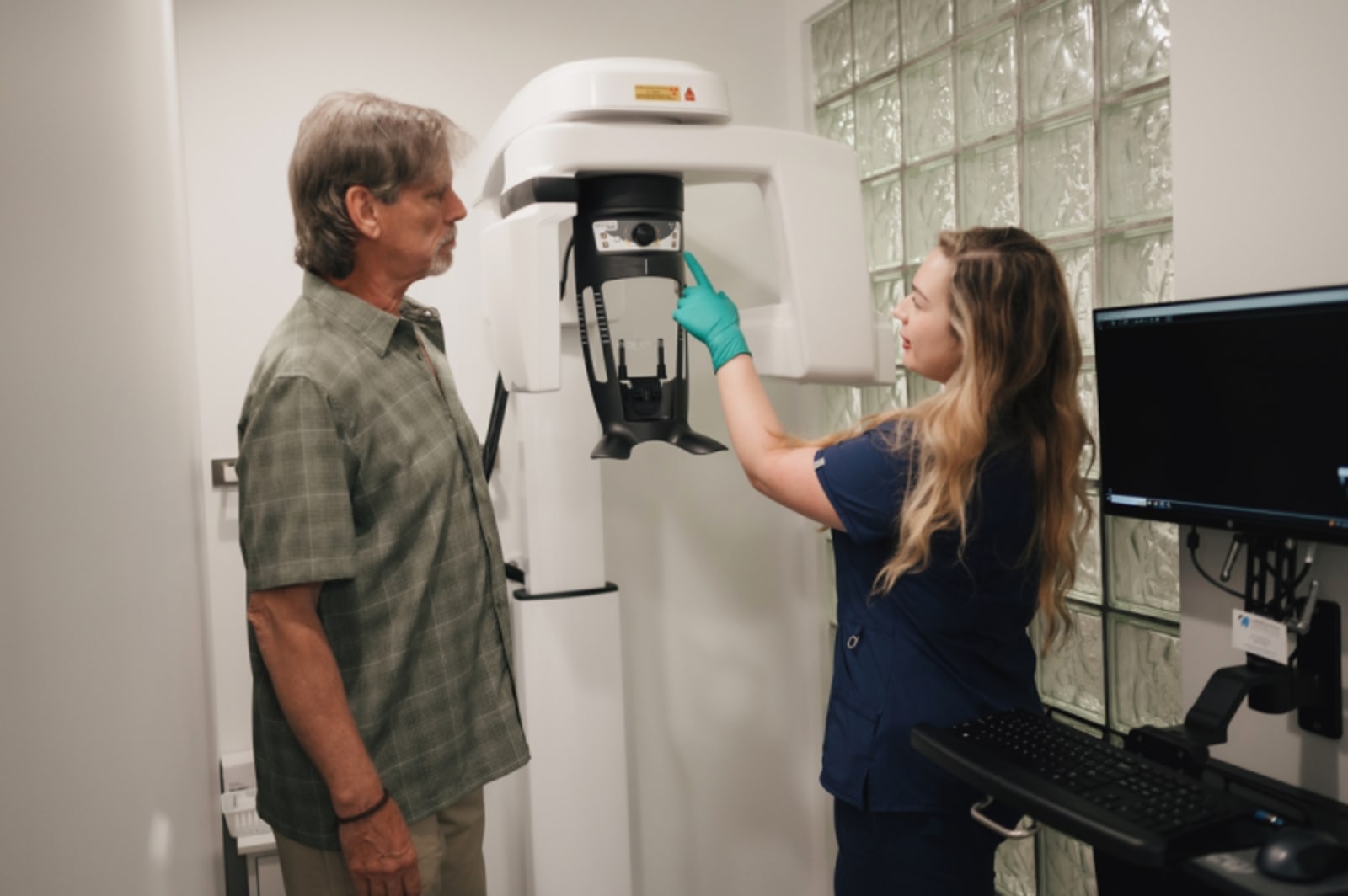
This is also why 3D computer-guided imaging matters at the planning stage. Seeing bone volume in three dimensions means the plan reflects your actual anatomy, not a guess made from a flat X-ray.
One Tooth or Several: How Scope Changes the Math
The other big variable is straightforward: how many teeth are being replaced, and what method is used to replace them.
A Single Tooth
Usually the simplest path. One implant, one connector piece (called an abutment), one crown, plus any site preparation needed beforehand. Because everything happens at one location, this is the easiest scenario to estimate accurately at a consultation.
Individual Implants for Multiple Teeth
Each missing tooth gets its own implant and its own crown. You get the most independence tooth by tooth, and the cost reflects that, because you're paying for surgery and restoration at each separate site.
A Bridge Supported by Implants
A smaller number of implants holds a bridge that spans the gap between missing teeth. Per tooth replaced, this is often more cost-efficient than placing an individual implant at every position, though whether it works for you depends on your bone and where the gap is located.
Full-Arch Solutions
A fixed, implant-supported set of teeth replaces an entire upper or lower arch using a planned number of implants. This is a much larger scope of treatment with its own surgical planning and custom components, so comparing a full-arch quote to a single-implant quote is really comparing two entirely different things.
Sedation and Surgical Complexity
How your surgery is managed affects the cost, and it is something patients often overlook when comparing estimates. Many people do fine with local anesthetic alone, but others are better served by sedation, whether because of dental anxiety, a longer procedure, or the nature of the surgical site. Sedation requires additional monitoring and clinical time, so it raises the cost. When comparing quotes from two offices, check whether one includes sedation and the other assumes local anesthetic only.
Surgical complexity matters too. A history of implant failure, prior infection at the site, closeness to the sinus or nerve canal, or active gum disease that needs treatment first all require more planning and more time in the chair. When a case calls for a periodontist, an oral surgeon, and coordination with your general dentist for the final crown, our team handles that planning together in one building, so it stays one conversation rather than three separate appointments.
Insurance, Out-of-Network Coverage, and What "No Insurance" Really Means
Most traditional dental plans in Michigan classify implants as cosmetic or elective, so coverage is minimal or nonexistent for most patients. That makes searching "without insurance" a little misleading: people who do have dental coverage often land at a very similar out-of-pocket number. One exception worth knowing: Lakeshore Dental Specialists is in-network with most Federal Employee Dental PPO plans, so federal employees, retirees, and covered family members typically have a clearer path to benefits.
For most patients, the question shifts quickly from "will my insurance cover this?" to "how do I make this work financially?" That conversation is worth having once you know what your treatment plan actually involves. Financing options are available to help make the cost manageable, and our team can walk you through what your specific plan covers before treatment starts.
Making the Cost Workable
Implant costs are spread across several months of treatment, not billed all at once. That staging makes financing more manageable than it first appears, and there are several options worth knowing about before your consultation.
- Sunbit financing builds a payment plan around your situation, not a one-size-fits-all structure.
- Direct payment arrangements with our team are also available as treatment progresses.
- Periodontal Maintenance Plan covers four periodontal cleanings, four exams, and an oral screening for $669 a year, with no deductibles, no annual maximum, and no pre-approvals needed. Family members get a 5% discount, and there is a 30-day money-back guarantee if no benefits have been used.
If concerns about credit are keeping you from booking a consultation, bring it up rather than letting it stop you. What feels like a barrier often looks very different once someone walks the real numbers with you.
FAQs
How Much Bone Do I Have, and Will I Need a Graft or Sinus Lift?
Bone volume is the single biggest factor separating a straightforward implant case from a more involved one. Your provider will use 3D imaging to assess what is available. If the volume is insufficient, grafting or a sinus lift is required before an implant can be placed, and both add time and cost to the plan.
What Are My Restoration Options, and How Do They Compare Over the Whole Plan?
The main options are a single implant, an implant-supported bridge, or a full-arch solution. Each prices out differently across the full treatment, not just per implant. The right fit depends on how many teeth are missing, their location, and how much bone is available to support the restoration.
What Kind of Sedation Do You Recommend, and Why?
Sedation recommendations depend on the length of the procedure, the complexity of the surgical site, and the patient's comfort level. Some cases are handled with local anesthetic alone; others benefit from IV sedation. Always confirm what a quote includes, since sedation adds cost and not every estimate accounts for it.
Who Is Doing Which Part of My Treatment?
At Lakeshore Dental Specialists, the surgical placement is handled by one of our periodontists or oral surgeons. The final restorative crown is then coordinated with your general dentist. Our team stays in close communication throughout, so the handoff is smooth and your overall plan stays on track.
The Consultation Is Where a Range Becomes a Plan
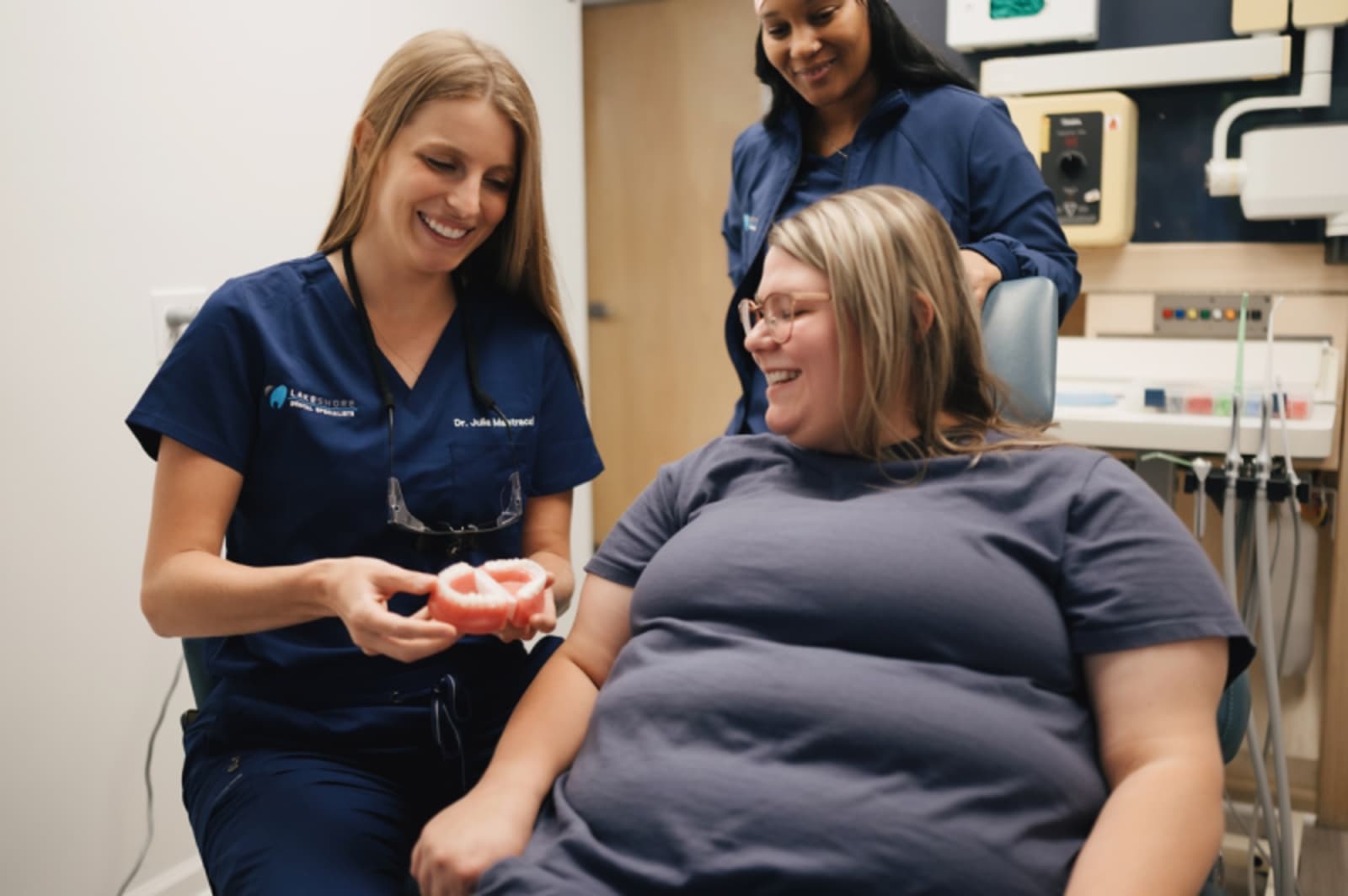
Your actual number comes from looking at your jaw, your gum health, and your goals together, in one appointment, with the surgeon, the periodontist, and the restorative specialist all in the same conversation.
Come with your questions and your research. Both are welcome. You can be seen with or without a referral from your general dentist. Ready for a clear picture instead of a range? Call our Eastpointe office at (586) 238-3199.
WE CAN’T WAIT TO MEET YOU
Call (586) 777-0260 or request an appointment online to set up your first visit. We’ll be in touch soon.