

What to Expect at Your Dental Specialist Referral Appointment

When Your Dentist Says "I'm Referring You to a Specialist"
Maybe you've been through this before: your cleaning is wrapping up, your dentist is looking at an X-ray, and then comes this sentence: "I'd like to send you to a specialist for this." Maybe it's an implant. Maybe it's a gum problem that hasn't responded to regular cleanings, or wisdom teeth that need to come out. If your next thought was "wait, is this serious?" that reaction is completely normal.
A referral is a planned handoff, not an alarm. It means the next step in your care benefits from someone who focuses on that one area every day. Your dentist isn't stepping away from your case, and your first appointment with us is a consultation. Nothing is scheduled or started until you understand the plan and agree to it.
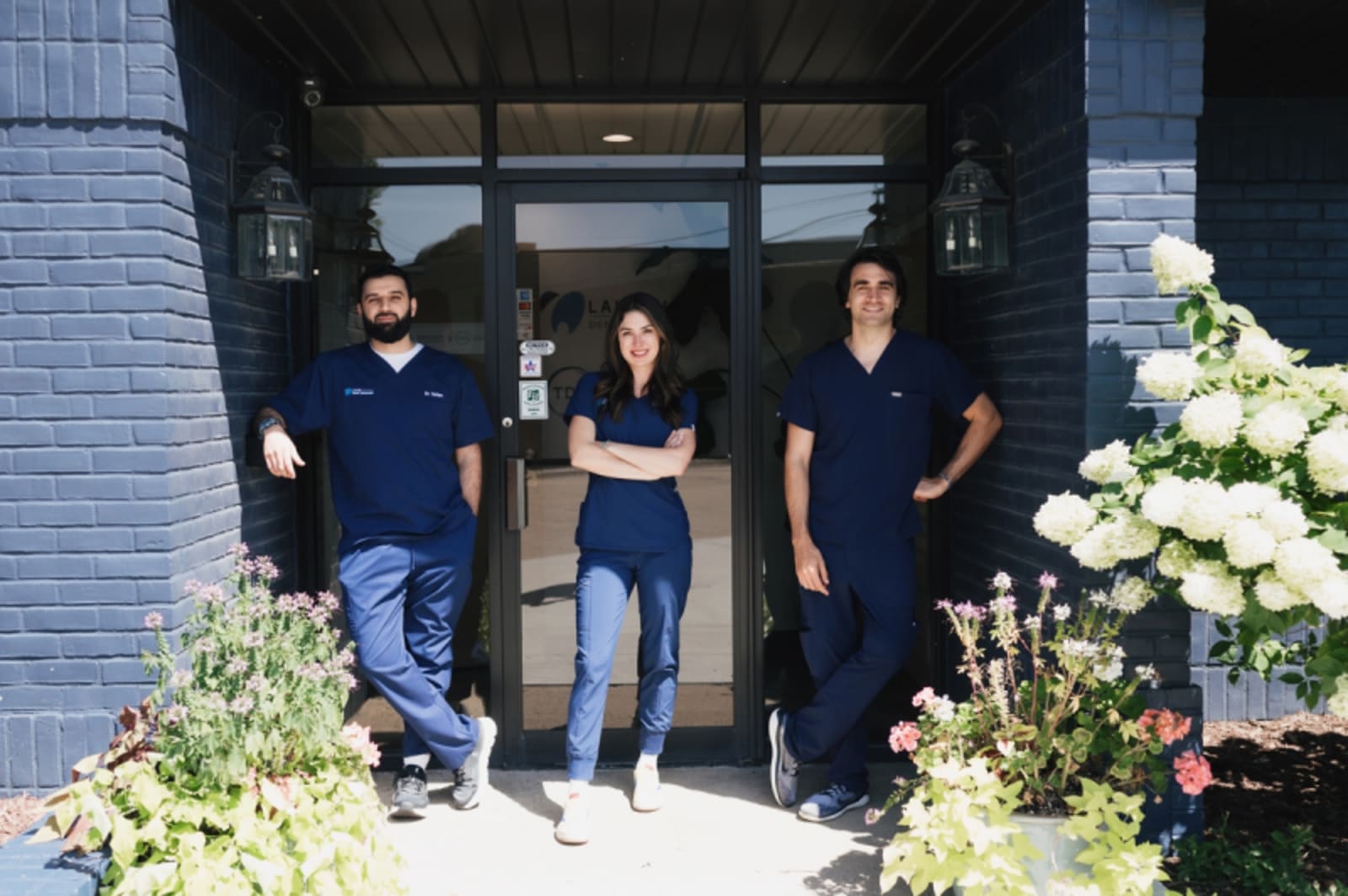
Dr. Weiner, Dr. Calhoun, Dr. Tattan, Dr. Karwacki, and the rest of our team at Lakeshore Dental Specialists in Eastpointe see referred patients all the time. Here's what to expect from the moment your dentist says the word "specialist."
If you'd rather just talk to someone about this, call us at (586) 238-3199.
Why Your Dentist Referred You in the First Place
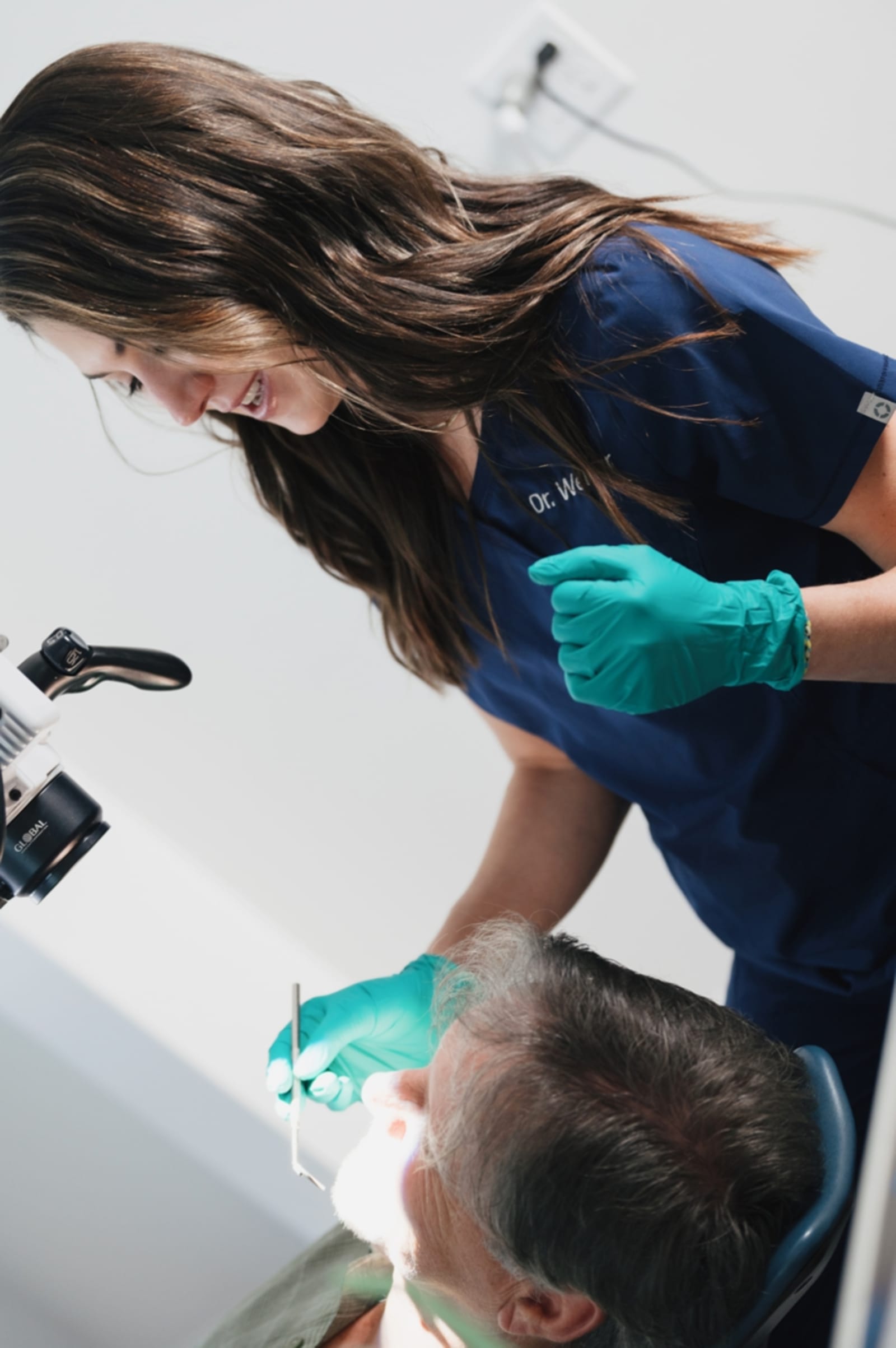
General dentists handle an enormous range of care, and they're good at it. What changes with a specialist is depth. After dental school, a specialist spends additional years in post-doctoral training focused almost entirely on one defined area, then spends a career doing mostly that. The difference shows up less in routine cases and more in complicated ones: bone loss, prior failures, or anatomy that simply doesn't cooperate.
Two specialties come up most often in referrals, and patients regularly ask us how they differ.
What a periodontist does
A periodontist takes care of everything that holds your teeth in place: gums, bone, and the connective tissue underneath. If gum disease has damaged that support, or there isn't enough bone to anchor an implant, a periodontist is often the right lead provider.
They focus on the gum and bone foundation that an implant depends on to stay stable long term. Dr. Weiner is board certified in periodontics and dental implants, and Dr. Tattan practices in the same area.
What an oral surgeon does
An oral and maxillofacial surgeon handles surgical extractions, wisdom teeth, jaw-related procedures, and implant cases that involve anatomy like the sinus, where extra surgical precision matters. Dr. Calhoun is our oral and maxillofacial surgeon and holds a PhD in oral biology from UCLA. If your referral slip names one specialty rather than the other, that is usually a clue about which part of the problem your dentist considers the starting point.
Why having both in one building matters to you
Plenty of complex cases don't fit neatly into one specialty: a tooth that needs to come out, a site that needs grafting, gum disease that has to be stabilized first, then an implant, then a crown from your regular dentist. When those specialists practice in separate offices, you become the messenger.
Here, implants, oral surgery, periodontics, endodontics, and orthodontics are all in the same Eastpointe office. That matters for your schedule too: a graft usually needs several months to heal before an implant can go in, and when the surgeon and the periodontist work in the same building, that timeline gets coordinated once instead of renegotiated across two separate practices.
What to Bring to Your First Specialist Appointment
Showing up prepared changes what you can get done in one visit. When intake moves quickly, your specialist spends the appointment evaluating you instead of chasing paperwork.
Your records and imaging
Your referring dentist has most likely already sent your X-rays and clinical notes, but call their office to confirm the transfer went through, because faxes and portal uploads do occasionally get lost. If the records haven't arrived, ask whether you can pick up a copy and bring it yourself.
Prior imaging is especially useful when surgery is being considered. It lets us see how a site has changed over time rather than just how it looks today. If your case involves implant planning, ask what kind of imaging your dentist captured.
Standard X-rays show a flat image; 3D scans show bone volume, nerve position, and depth, which matters when implant placement is being planned. We may take new scans here if what was captured elsewhere isn't enough.
Your ID and insurance card
This can be easy to forget on a rushed morning. Set both by your keys the night before just in case.
A complete medication and supplement list
Everything, not just prescriptions. Over-the-counter medications and supplements belong on the list too, since some affect bleeding and influence how anesthesia and surgery get planned.
Your written questions
Almost everyone forgets at least one question once they're in the chair. Write them down beforehand, even the ones that feel small or awkward. Cost, recovery time, what happens if you wait: all fair game. If you're coming in to discuss tooth replacement, our dental implants page is a good place to start building your list.
A second set of ears, if you want one
You're welcome to bring a spouse, adult child, or friend. When a treatment plan has several stages, having someone else in the room makes it easier to think things over at home.
One note on coverage: our office is now in-network with most Federal Employee Dental PPO plans, so federal employees, retirees, and covered family members are welcome as new patients.
How the First Visit Actually Unfolds
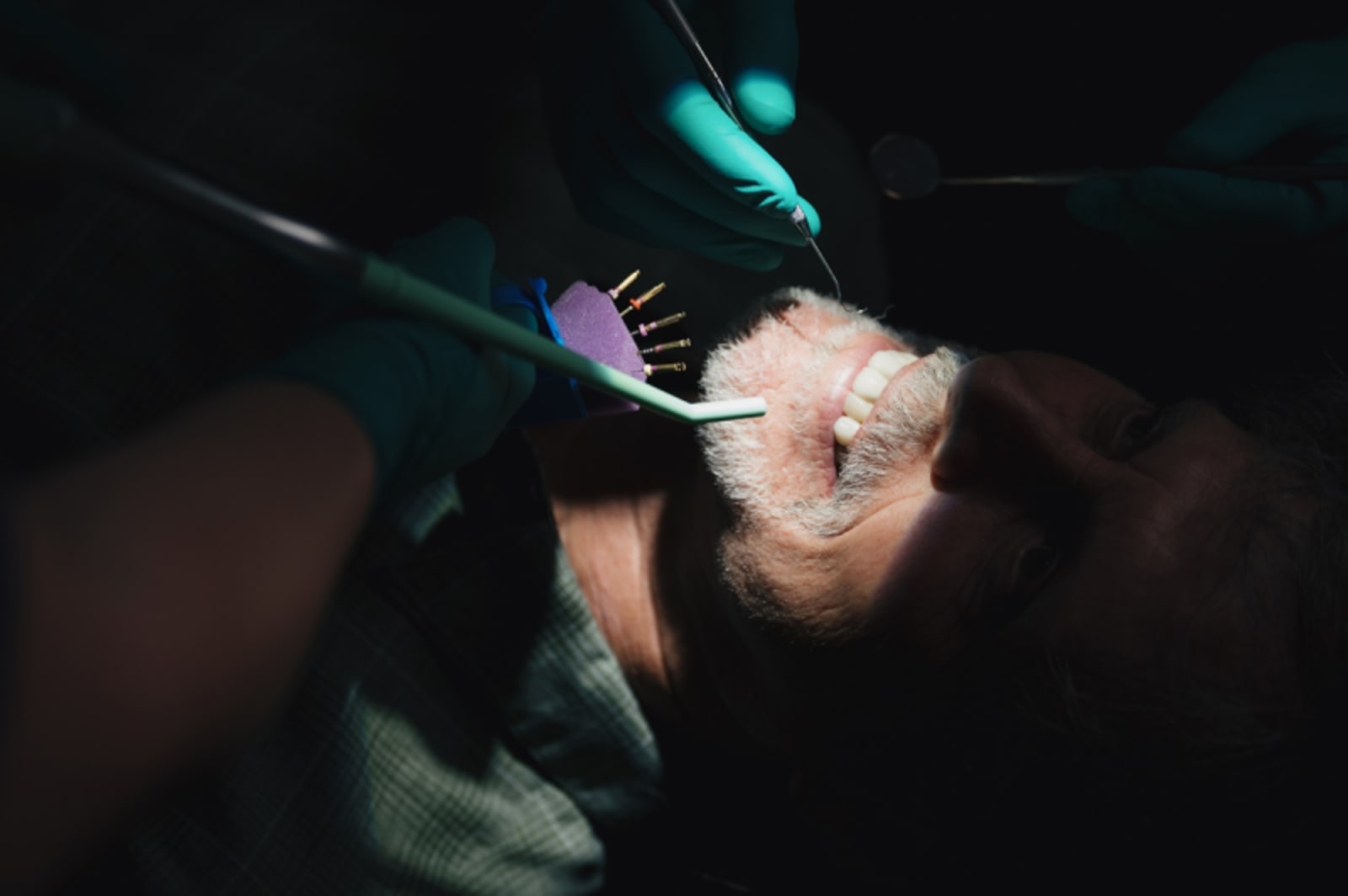
Knowing the order of events takes away most of the uncertainty. Your first appointment is an evaluation and a conversation, and it follows the same general path.
1. Intake and health history
Paperwork first, then a review of your medical history and whatever records came over from your general dentist. Conditions like diabetes, high blood pressure, or blood thinners all affect how we safely plan surgical care, so every question on that form has a reason behind it.
2. The clinical exam
Next, the specialist examines the area your dentist flagged, along with the surrounding teeth and gums, because problems don't always stay in one spot. Depending on the case, we may take our own updated imaging.
We use 3D computer-guided imaging for planning, which shows bone volume, nerve position, and sinus anatomy in three dimensions rather than the flat view a standard X-ray gives. For anyone with bone loss, a previous implant failure, or an old root canal complicating things, that level of detail is what makes a reliable plan possible.
3. The conversation about your options
Then we walk through what we're seeing, what we'd recommend, and what the alternatives are. Below are some questions worth asking:
- What are my options, and how do they compare on longevity and cost?
- What happens if I wait six months, or decide not to treat this?
- How many appointments will this realistically take, start to finish?
- What's recovery like, and how much time off work should I plan for?
- Which parts happen here, and which go back to my regular dentist?
If the plan involves dental implants or treatment for gum disease, ask how the stages connect and who is responsible for each one.
4. What happens next
You leave with a clear picture of what we're recommending and in what order, including roughly how long each stage takes. Cost is reviewed based on your actual case, along with payment options, including Sunbit financing for breaking larger treatment costs into manageable payments.
How Your Specialist and Your Regular Dentist Stay in Sync
Your two providers stay connected throughout your care. After your consultation, we send a written summary back to your referring dentist covering what we found, what we're recommending, and what the treatment sequence looks like. We send another update as treatment moves forward.
Those updates matter because your general dentist knows things we're still learning about you: your full history, how your bite has changed over the years, which restorations were done and when. When our work fits inside that bigger picture, you're not repeating yourself at every visit, and no one is making decisions without the context that would have changed them. That coordination is easier here because our specialists share one office rather than working across separate practices.
Implants show this most clearly. In many cases we place the implant and handle the surgical side, then coordinate with your general dentist for the final crown, so the person who knows your bite best finishes the restoration. A referral is not your dentist stepping away from your care. It is a partnership, and both sides stay in the loop.
Why Complex Cases Do Better in a Specialist's Hands
Specialists get better at complex cases because they handle them constantly, and they have training specifically around their specialty. Seeing the same types of problems day after day builds a level of judgment that general practice simply doesn't develop. That isn't a criticism of general dentists. It's how specialization works across all of medicine.
The cases that arrive here rarely involve a clean slate:
- A failed implant that has to be removed, with infection cleared and the site healed before anything new can be placed
- Bone loss significant enough that grafting has to come first
- Missing upper molars where the sinus has expanded downward, leaving too little bone height without a sinus lift
- Advanced periodontal disease that has to be stabilized before any restorative work will hold
- Old infections or failed root canals that have compromised the surrounding tissue
If you've already been through a procedure that didn't work, you're not looking for someone willing to try again. You want someone who has worked through those same complications many times and can tell you honestly what's realistic.
Often the hardest call isn't the surgery itself. It's knowing what has to happen first, and how long to wait before the next step.
Questions Referred Patients Ask Us Most
Do I actually need a referral to be seen?
No. Plenty of patients find us on their own. A referral just means your dentist has already identified the issue and shared their records, which gives us a helpful head start. Either way works.
Will anything be done to my teeth at the first visit?
Nothing gets treated at the consultation. That visit is for evaluation and planning, and nothing moves forward until you understand your options and agree to a plan.
How long does the appointment take?
Plan for more time than a routine cleaning. Between intake, the exam, any imaging, and a real conversation about your options, it is not a quick in-and-out visit.
What if I don't like the plan I'm given?
Say so. Ask what other options exist and what the tradeoffs are. A consultation does not commit you to anything.
Does my regular dentist stay involved?
Yes. They receive written updates throughout your care, and for restorative work like implant crowns, they often complete the final step. Both offices stay in the loop the whole way through.
Ready for Your Referral Appointment?
A referral is your dentist and your specialist working toward the same goal, and your first appointment is a conversation, not a commitment.
Whether your dentist sent you or you found us yourself, bring your questions and we'll work through them together. Our Eastpointe team includes board-certified specialists in periodontics, dental implants, and oral surgery, so the answers come from the person who will actually be doing the work.
Call us at (586) 238-3199 and we'll get you on the schedule.
WE CAN’T WAIT TO MEET YOU
Call (586) 777-0260 or request an appointment online to set up your first visit. We’ll be in touch soon.